Saturday, August 18, 2012

The Last Vanderbilt Stronghold, 640 Fifth Avenue, The Home of Mrs. Cornelius Vanderbilt


Upon William Henry Vanderbilt's death, he left his side of the Vanderbilt triple palace in New York City, which he had built for him and his daughters, to his youngest son George Vanderbilt. Upon George Vanderbilt's death it was to pass to George's eldest son, if he had a son. George Vanderbilt died without a son, so the Vanderbilt mansion at 640 Fifth Avenue, along with $1 million, passed to the eldest son of the eldest son of William Henry Vanderbilt, Cornelius Vanderbilt III and his wife, Grace Wilson.


Neily, As Cornelius Vanderbilt III Was Called, Was The Handsome Son Of Cornelius Vanderbillt II, Who Disinherited Him Because of His Marriage To Grace Wilson

Grace Wilson Vanderbilt, Of The "Marrying Wilsons", Would prove Them All Wrong And Succeed Them All As The Last Mrs. Vanderbilt

Neily had been disinherited by his father, who disapproved of Grace and her family. Since Cornelius didn't like Grace, none of the Vanderbilts did and she was shunned by the entire family. Not even Neily's stern mother, Alice, who was considered a saint, would see them. The only Vanderbilt who would talk to them was Neily's uncle, William Kissam Vanderbilt.

"Why, It's The Back Hole of Calcutta" Grace Exclaimed Upon Entering The Mansion "I Couldn't Possibly Live Here"

At Grace's desiring, Neily quickly had plans drawn up for major alterations to the mansion at 640 Fifth Avenue. Once done, he turned the plans over to famed architect Horace Trumbauer, who would carry out the renovations. The cost of the renovations would total to $500,000, which at that price the newspapers commented "For that amount, as fine a private home as the average wealthy man could wish for could be built in the most exclusive residential part of the upper east side"

Horace Trumbauer (middle) Had Done Numerous Commissions For Several Of The Super Wealthy, Such As The Wideners And The Stotesburys

Once Completed The House Was One Of The Most Luxurious And Grand Homes In All Of New York City

2 years later the house was ready for occupancy and the Vanderbilt's immediately opened the house with a large ball. The exterior had been completely stripped of most of it's decorative features and the home had been expanded in the back. The most obvious addition was the large, one story entrance pavilion.

Grace Always had A Red Carpet Rolled Out From the Entrance Pavilion To Greet Arriving Guests And Lead Them Inside

The interiors had been completely gutted, the only thing salvaged was the large, malachite vase that had stood in the original entrance vestibule. The new interiors included on the ground floor a marble-lined hall, two dressing rooms, a three-story great hall, a ballroom, music room, dining room, family dining room, library, art gallery and the red and gold ante room. The second floor held Neily and Grace's private master suites, each with their own bath and dressing room, Grace's pink boudoir, Neily's private sitting room and sound proof laboratory, the breakfast room and the children's rooms. The next two floor held the guest rooms, guest sitting rooms, bathrooms, dressing room and the female servant's rooms. The basement held the male servant's rooms, kitchens, laundry rooms and other service rooms.

The Stone Steps In The Entrance Pavilion Led Up To The The House, A Portrait of The Commodore Greeted The Guests


The Great Hall Held The Large, Malachite Vase That Had Been In The Original Vestibule Before The Renovations

The French Ballroom Could Hold 500 People And Was Used At Least Once A Month For Balls, Events or Parties


The Music Room Had A "Parquet De Versailles" Floor That Was Considered Too Beautiful To Cover Up
The Art Gallery Held The Art Collection That William Henry Vanderbilt had Spent His Life Collecting

The Library, Which Held Barely Ant Books, Was Where Grace Had Tea Every Morning, Around The Room Were Pictures Of The Famous People Grace Had Entertained

The French Dining Room Had A Table That Could Extend Out To Hold 50 People, All At Once, At One Of Grace's Many Dinner Parties

The Family Dining Room Was Where The Family Had Their Private Meals On The Rare Occasion That They Weren't Entertaining, The Paneling Had Come From Their Original New York City Townhouse

By the time the house was completed, Grace had already been recognized as the new Queen of New York City Society, replacing Mrs. Astor, who had died back in 1908. Grace began to host several balls and dinners during the New York City season. An invitation to her house, would secure social success.


Every year, at the opening of the Metropolitan Opera House, Grace's arrival was always the one most looked forward to. Her box at the Met was located on the famous first tier of boxes, the famous "Diamond Horseshoe" as it was called (Mrs. Astor had always claimed that the "Diamond Horsehoe" had been named after her famous 200 stone diamond necklace, which she had always worn at the opening of the opera).

The Opening Night At The Metropolitan Opera House Was The Highlight Of The New York City Social Season


Shortly after they moved into the Vanderbilt mansion, Neily began to realize the mistake he made, sacrificing a fortune for a pretty face, because once a pretty face was gone, it was gone. Grace began to grow uglier and uglier with the years. She began to grow white hair early in life and she left it alone, except for dying it a special Chinese Tea. She began to gain weight from all the French cooking at her dinners and, because servants did everything for her, she did absolutely nothing to lose weight.

Grace Vanderbilt At The Opening Of The Metropolitan Opera House, Which She Never Missed, Always Receiving Guests In Her Private Box

Grace had a very organized schedule, which was, one ball a month, two large dinner parties a week and smaller dinners and brunches daily. At Grace's dinner parties were the usuals: Berwinds, Goelets, Hammonds, Aldrichs, Burdens, Harrimans and Biddles. At her large dinners there was normally around 100 people, most of whom Grace scarcely knew, but at her small dinners of normally 50 people, Grace knew everyone there.

Pictured Above Is One of Grace's Small Dinner Parties, In Attendance That Night Were Mrs. Winthrop Aldrich, Sir And Lady Cadogan, Mr. And Mrs. Hammond, Rep. Joseph C. Baldwin (R-NY), Madame Deprez And J. Watson

When in Newport, Grace rented "Beaulieu" cottage, formerly the home of John Astor III and William Waldorf Astor, which she later purchased. It was at "Beaulieu" that Grace gave her first major party, where she had the play "The Wild Rose" come to Newport and perform for her guests.

"Beaulieu" Cottage Was Right Down The Street From Neily's Parent's Cottage, "The Breakers", Which Was Still Occupied By Alice

Eventually Alice excepted Grace and Neily, although the relationship was frosty. Alice, who was considered one of the most wealthiest women in the world, began to help Neily and Grace out financially, which they needed.

Frosty Alice Had Worn Nothing But Black And Pearls Every Since The Death Of Cornelius Vanderbilt

Grace also wanted a yacht, like her sister May Goelet, and she had Neily commission a large boat, which they called "The North Star", named after Cornelius Vanderbilt I's yacht. The yacht was fitted with the finest materials and included a drawing room, library and dining saloon.

Each Year, At Grace's Urging, The Vanderbilts Sailed "The North Star" To Those Ports Where They Would Most Likely Be Seen By Royalty

To escape his wife and the entertaining that she brought with her, Neily joined the army. World War I proved to be his finest hour. Neily also developed horrible habits of smoking and drinking regularly. He was quite mean to his son, who claimed he liked Neily better when he was drunk than when he wasn't.

Neily Became Known As "The General", Something Grace Was All Too Pleased To Call Him In Front Of Guests

Neily also thought he might like to enter politics, so he attended the Republican National Convention in Saratoga Springs, although he realized it was too expensive for him saying "Look I may be a Vanderbilt, but I am not a Rockefeller!" Most of the time, Neily just retreated to his other yacht, the Winchester.

The "Winchester", Which Neily Had Purchased From Vincent Astor, Was Mostly Paid For By Alice And Neily's Sister Gertrude Whitney

While Neily would be sailing around on his yacht, Grace would be back in New York City entertaining . Every year at the New York City mansion and "Beaulieu", Grace would be entertaining up to 10,000 people a year. Every night at dinner parties, Grace would have a red carpet rolled out across the sidewalk to lead the guests inside. Greeting guests inside, she would be beside two footmen in livery, welcoming them inside. Although she hated the press, they loved her. She was mostly photographed at the opening of the Metropolitan Opera.


Grace Vanderbilt Never Missed The Opening Of The Metropolitan Opera House, Not Until Her Death Would She Ever Miss One

When Alice died in 1934, she left Neily the Gwynne Building in Ohio and about $7 million, if it hadn't been for her money, Grace and Neily would have been broke. Grace and Neily were spending hundreds of thousands of dollars a year on parties, jewelry, taxes, clothes, food, servants and numerous amounts of other things, although this didn't stop Grace.

Grace Arriving At The Opera With Her Three Famous Signatures: The Bandeau or "Headache Band"On Her Head, Her Diamond Stomacher And The Famous Silver Fox Wrap

When Grace and Neily's son, Neil, announced he would be working as a newspaperman, they promptly kicked him out. Neil had had an unfortunate childhood, Grace had been a distant mother and Neily had wanted nothing to do with his children, so he was not surprised when they kicked him out.

Neil Vanderbilt Would Go On To Be Married Very Many Times, Much To The Disapproval Of Grace

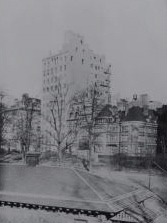
While Grace was entertaining and mixing with royalty, the world around her was changing. Over time the residences around the 640 Fifth Avenue mansion had been replaced with large skyscrapers and soon the 640 Fifth Avenue mansion became lost in a sea of skyscrapers.

The Other Side Of The Vanderbilt Triple Palace Was Getting Ready To Be Torn Down And Replaced With A Large Apartment Building

Slowly they came down, one by one Vanderbilt Row disintegrated and soon only Grace and Neily's aunt, Florence Twombly, were left. 640 Fifth Avenue became a shrine of a bygone era, the only private residence left on that side of town.

In The Middle Of A Sea Of Skyscrapers Was Grace Vanderbilt And Her Imposing Mansion, 640 Fifth Avenue

When Neily died, he left an estate of $4 million. Grace inherited $2 million and $900,000 to his two children. It had turned out that shortly before his death, Neily had sold 640 Fifth Avenue to developers to raise money. Under the terms of the agreement Grace would get to remain at 640 Fifth Avenue until two years after Neily's death. Grace continued to entertain just as lavish as she always had, hosting her last ball in 1941. Finally she too had to give up.

The Movers Came And Packed Up The Large Art Collection, Which Was Being Given To The Metropolitan Museum of Art, Along With The Malachite Vase

The Vanderbilt Mansion Under Demolition, 600 Workmen Instructed To Tear Apart 640 Fifth Avenue, The Last of It's Kind
The Great Hall Of The Mansion Was Completely Torn Apart, Not One of It's Decorative Features Saved

Grace Vanderbilt moved to another New York City townhouse, which was now in the heart of the fashionable district, which had formerly belonged to William Starr Miller, Grace called it "The Gardener's Cottage" because it contained only 28 rooms, compared to the 85 rooms at 640 Fifth Avenue.

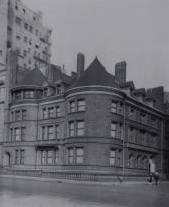
The William Starr Miller Mansion, Which Grace Bought For $800,000, She Regally Brought Her Butler And Her Bathroom

The William Starr Miller Mansion Today, Surrounded On All Sides By Skyscrapers, Which Tower Over The Mansion

It was at the Miller mansion when Grace passed away with her family by her side, worrying if the money would last. Grace once said "Poor Marie Antoinette, If the Revolution ever came to America I would surely be the first to go"

Tuesday, August 14, 2012

The Tiffany Ball Lights Up Marble House


In 1895 there were 300 live hummingbirds hovering around an indoor fountain in honor of the Duke of Marlborough's visit to the $11 million Marble House built in Newport RI by William K. Vanderbilt, grandson of Commodore Vanderbilt. On July 13 1957 Marble House, which like many sumptuous Newport estates had been closed in recent years, glittered briefly again, although no hummingbirds were present this time. The occasion was the benefit Tiffany Ball, attended by 1,200 members of East Coast society, resplendent in jewelry valued at an estimated $20 million.

Marble House Glittered Brightly During The Tiffany Ball, With A Never Ending Fleet Of Limousines And Luxury Cars Pulling Through It's Driveway


The ball was held by the Preservation Society of Newport, the purpose of it was to raise money for the restoration of some 400 17th and 18th Century buildings in Newport County. To enter the house, dance in the ballroom, dine on the lawn and in the dining room and mingle throughout the house, it cost $25 a head ($203 in 2012).

The Ball Was Sponsored By Tiffany & Co., Which Furnished A $12,000 Table Service And A $600,00 Diamond

The guest list included many representatives of Newport's High Society families and several members of Newport's Old Guard were there. In attendance were Mrs Frederick Prince Jr. (whose husband owned Marble House), Katherine Warren (leader of the Preservation Society) and her husband George Henry Warren, Mrs. Louis S. Bruguiere (queen of Newport's Old Guard and a surviving member of Mrs. Astor's 400), Mr. and Mrs. Thomas C. Clagett (he was vice president of Coal & Coke Co. and she was vice chairman of the ball), Mr and Mrs John Nicholas Brown (he was known as the "Richest baby in the world" and she helped to find the Preservation Society), Senator and Mrs. John F. Kennedy, Mrs. Ottavio Prochet (Committee vice chairman), Mrs. Guy Fairfax Cary (a surviving member of Mrs. Astor's 400), Mrs. John Drexel III, Mr and Mrs. Sheldon Whitehouse, Mr and Mrs James C. Clark, Henry Randolph and Count and Countess Szapary (the only Vanderbilt there).

Mrs Frederick Prince Jr., Ottavio Prochet, Mrs. Guy Fairfax Cary And The Butler Greeting Guests As They Arrive
Mrs. John R. Drexel III Shaking Hands With John F. Kennedy. Mrs. Drexel Liked Kennedy, Despite The Fact That He Was Pink (Democrat)

Mrs Sheldon Whitehouse Was The Lucky Lady Who Was Chosen To Wear The $600,000 Diamond Tiffany Had Loaned

Countess Szapary Was The Only Vanderbilt In Attendance At The Ball, Even Though The Home Had Once Been Owned By Vanderbilts

Thomas Clagett And His Wife Were The Luck Winners Of The Ball's Raffle Prize, Two Tickets To Rome

Th evening was a hit, netting $30,000, and it would be repeated several times more by the Preservation Society. During the night Senator Kennedy seemed to be all over the place, talking and socializing with other guests. He had worried before about a photographer taking a photo of him holding a drink, but no such photograph was ever taken.


Senator Kennedy Was All Over The Place During The Ball, Never Once Being Seen With A Drink Of Alcohol In His Hand

Guests Socialized On The Lawn During The Tiffany Ball At Marble House, A Stage Had Even Been Set Up

The Enormously Wealthy Perle Mesta Arrived A Little Late, She Was Greeted By Henry Randolph At The Entrance Of The House

The Tiffany Ball will be remembered as one of the greatest balls ever held in Newport, much like Mrs. Astor's annual Summer Ball and Mrs. Fish's annual Harvest Ball.

Saturday, August 11, 2012

The Mrs. Henry O. Havemeyer Mansion, New York City


When millionaire art collector Henry Osborne Havemeyer died, he left not only a spectacular fortune of almost $30 million to his wife, Louisine Elder Havemeyer, but also a sumptuous, art-filled mansion, facing the Central Park.  Louisine also inherited the nearby stables, which they had shared with Col. Payne and their Long Island estate. 

Mrs. Havemeyer Was Instantly Turned Into One Of The City's Wealthiest Women Upon The Death Of Her Husband 

Mrs. Havemeyer's Imposing New York City Mansion Was Filled With Her And Her Husband's Large Art Collection  


The Stables That Were Shared With Col. Payne Were Quickly Turned Into Garages To House Mrs. Havemeyer's Fleet Of Rolls Royce 

The Havemeyer mansion sat on one of the most valuable plots of land in the city. The area surrounding the mansion soon became occupied by large, imposing townhouses, designed in all sorts of styles and periods. Next door the dingy brownstone that had occupied the lot made way for the grand residence of Mrs. Parsons. 

Mrs. Parsons's Marble Residence Was Surprisingly Modern Compared To The Other Townhouses That Surrounded It

Next to Mrs. Parsons the residence of R. Livingston Beeckman had risen and on the other side of the Havemeyer mansion, down the avenue, had risen the palace of Mrs. Astor and her son John, along with the residence of William Watts Sherman. 

Soon The Avenues Surrounding Mrs. Havemeyer Were Filled Fine Townhouses And Grand Mansions, Occupied By The City's Wealthiest People 

Mrs. Havemeyer continued to use her husband's fortune to support several of the causes her husband had supported, such as the Republican Party and Trinity Church, and would regularly give away around $1 million a year. The interiors of her New York City mansion would regularly be host to numerous fundraisers and charity balls, sometimes raising up to $80,000 in one night. 


The Drawing Room Of The Havemeyer Mansion Was Often Used To Hold Fundraisers And Charity Dinners 

While Mrs. Havemeyer was busy raising money and hosting fundraisers, the world around her and her house was changing. By the 1920's The great mansions that had lined the avenue surrounding the Havemeyer mansion were now being replaced with massive skyscrapers and tower-like apartment buildings. 


When The Massive Apartment Tower Rose Across The Street From Mrs. Havemeyer, The Surrounding Residents Got Their First Taste Of Commercial Invasion 

With rising taxes putting an end to many of New York City's great homes, Mrs. Havemeyer and a few others stayed on. Thanks to Mr. Havemeyer's fortune, Mrs. Havemeyer was able to still afford her New York City home and live in the same kind of luxury she always had lived. 


The Beeckman Mansion (Now Occupied By Mrs. Henry White), Parsons Mansion And The Havemeyer Mansion Were The Only One Left On Their Block 

Skyscrapers Were Starting To Replace The Grand Townhouse Along Fifth Avenue And Many New Yorkers Traded Their Townhouses For Apartments 

When Mrs. Havemeyer died in 1927, The New Yorkers who were still clinging to their townhouses knew exactly what would happen to the Havemeyer Mansion. Apparently Mrs. Havemeyer knew too, because in her will she had the house scrapped of all of it's decorative features and donated them to the Metropolitan Museum of Art. She left an estate of $9 million, small compared to the fortune she had been left by her husband, but she had given many gifts in her lifetime and had still continued to donate and spend around $1 million a year, even with taxes on her mansion rising to $100,000 a year. She left $1 million to her children and another million to various charities. She donated most of the mansion's furniture to museums and the art collection went to the Metropolitan Museum of Art. 


The Havemeyer Mansion Was Quickly Torn Down, Along With The Parsons Mansion And Replaced With Another Vulgar Skyscraper 


The Only One That Remains Is The Former R. Livingston Beeckman Mansion, Now The Mission of Serbia 

Thursday, August 9, 2012

Farewell To Fifth Avenue


In 1935, when Cornelius Jr., the rebellious son of Cornelius Vanderbilt III, published a memoir called "Farewell to Fifth Avenue" he was again doing the opposite of what his parents wanted. 6 years later his words came true when his mother Mrs. Vanderbilt, the former Grace Graham Wilson, gave her final but most terrific ball in the vast and venerable Vanderbilt mansion at 640 Fifth Avenue. 1,800 guests swarmed in , weighed down by $100 million worth of jewelry and all their decorations.

Soon After The Ball The Vanderbilt Mansion at 640 Fifth Avenue, By Then The Only Private Residence Left In That Part of Town, Was To Meet The Wrecker's Ball

The ball was to be a United Service benefit, supposedly open to the public, but at $20 a person ($312 in 2012) only the wealthy could afford to attend. The guests list included many of New York City and Newport's Old Guard such as Mrs. William Watts Sherman and the former Mrs. James Laurens Van Alen, by then Mrs. Louis Bruguiere, Mrs. George W. Kavanaugh and her friend Lady Decies, the former Mrs. Harry Lehr, Several members of New York City's "Cafe Society" like Mrs. Winston Guest , Mrs. Robert Lehman, Mr. and Mrs. William Woodward Jr., and several of society's eccentrics, such as Doris Duke and Charlene Cassini. Two Astors attended John Astor VI and Mr. and Mrs. Vincent Astor  and then there was also two Vanderbilts, Gloria Vanderbilt and Cornelius Vanderbilt Whitney.


All of Society Attended Mrs. Vanderbilt's Last Ball, No One Would Ever Decline An Invitation To Mrs. Vanderbilt's

The ball would raise thousands of dollars and would be Grace's most terrific event. As the orchestra played brilliant music, the guests danced in the ballroom, dined in the picture gallery, lounged in the library, played games in the red and gold ante room, mingled in the great hall, had dessert in the dining room and watched performances in the music room.


The Guests Trilled And Danced In The Brightly Lit French Ballroom. As The Orchestra Played On, Officers, Businessmen, Debutants and Royalty All Danced Together In Harmony

They Dined In The Large Picture Gallery, Filled With The Artwork Cornelius Vanderbilt's Grandfather, William Henry Vanderbilt, Had Spent His Life Collecting

The Great Hall Had Been Filled With Guests Earlier In The Evening, But As More And More Guests Retreated To The Ballroom And Picture Gallery, The Great Hall Became Less And Less Crowded

The Guests Lounged In The Library, Which Held Barely Any Books, And The Men Also Used This Room As A Smoking Room

The night had been as lively as ever, despite that Grace was depressed over the fact that this would be her last event in the Vanderbilt mansion. Mrs. George Washington Kavanaugh and her friend Elizabeth Lehr Decies created as scene when they arrived because they were each weighed down by 10 pounds of jewelry (diamonds of course). Mrs. George Washington Kavanaugh was the enormously wealthy wife of manufacturer Colonel George Washington Kavanaugh, and her occupation seemed only to be diamonds and society.


Mrs. Kavanaugh And Lady Decies (Formerly Mrs. Harry Lehr) In The Red And Gold Ante Room In The Vanderbilt Mansion

As if to remember the night, Mrs. Vanderbilt had let photographers come in and take pictures of the guests and of some of the rooms. The most famous one taken was of Grace Vanderbilt, seated in front of the tapestry wall in the ante room.

The Picture Of Mrs. Vanderbilt, Seated In Front Of The Tapestry Wall Of The Ante Room At The Vanderbilt Mansion

By 1 in the morning, most of the older guests began to leave and return home. One of the first to leave was Mrs. Van Alen, who needed to return to Newport and prepare for the dinner party she would be hosting that night. Mrs. Van Alen's limousine pulled up in front of the Vanderbilt mansion and her chauffeur helped into the car and prepared to take her to the airport where she would board her private jet and head to Newport. During the last hour of the party, as if to signify that Her Grace Vanderbilt nodded approval, as the orchestra played it's last notes a window in the french ballroom flew open, the wind blew and the curtains billowed as if a spirit were making a grand exit. Mrs. Cornelius Vanderbilt III had left her house for the last time.

Monday, August 6, 2012

Giraud Fost And His Beloved "Bellefontaine"


The passing of Giraud Foster, in his 95th year at "Bellefontaine", marked the end of a fabulous era in the Berkshires. Mr. Foster was one of the last of a group of wealthy resorters who brought world-wide fame and distinction to Lenox. His departure marked the end of an era of luxurious living.

Mr. And Mrs. Foster Represented To A Marked Degree The Aristocracy, The Wealth, The Culture And The Refinement, Which For A Century Had Been The Glory Of The Berkshires Resort Capital


"Bellefontaine", Mr. Foster's Summer Home, And Later Legal Residence, Was A Superb Replica Of A French Palace In The Time Of Louis XV

"Bellefontaine" had been designed by architects Carrere and Hastings and was the most ornate and luxurious of the resort's summer cottages, with interiors and furnishings prefabricated in Paris, then brought to Lenox and set in place by expert cabinet workers. Here Mr. and Mrs. Foster lived the life of royalty who knew and appreciated the finer things in life.

Celebrating Mr. Foster's Birthday Was A Highlight Of The Berkshires Social Season, Acceptance Was Adamant

Giraud Foster was skilled in finance; a world traveler in his younger years he was well informed in art, architecture, and literature (his library contained over 5 thousand books). Mr. Foster was the champion skipper of the Lake Mahkeenac Boat Club, president of the local Lenox Club and of the Lenox Golf Club, where he played the 18 hole course there most mornings and afternoons, senior warden of the Trinity Episcopal Church, delegate of the Republican Party and an officer of the Lenox Library.

The Louis XIV Drawing Room At "Bellefontaine" Housed A Portrait Of Giraud Foster Painted By Ellen Emmet Rand

In the old horse show days he often won the coveted blue ribbon for the best coach-and-four amid sharp competition from William D. and John Sloane, Capt. John Sanford Barnes, Charles Lanier and Frank K. Sturgis. He was also president of the Lenox Kennel Club and for a while the September dog shows were held on his estate.


Life At "Bellefontaine" Was An Ordered And Immaculately Manicured Progress From Day To Day; One Great Event Always Remained, Foster's Birthday

When Guests Arrived For Mr. Foster's Birthday Celebration, They Were Greeted By Him In The Great Hall, A Large, Marble Room, Filled With The Fosters Statuary Collection

The Dining Room Would Be The Scene Of Foster's Birthday Celebration, Sometimes 60 People Would Surround His Table And Celebrate

Sometimes There Would So Many Guests Attending His Birthday That They Would Overflow Into The Adjoining Breakfast Room

The Loggia Was Where The Male Guests Retreated To After Dinner For Smoking,  Alcohol And A Game Of Bridge
The Second Floor Loggia Was Where The Female Guests Retreated To After Dinner For Tea, Dessert And Gossiping

Mr. Foster's birthday occupied the 364 days which intervened between it's one celebration and next; the time devoted to it's planning was that time dedicated by Giraud Foster for his next year's birthday celebration. For more than 40 years Mr. Foster's birthday dinners, on November 8th, were society events of the first magnitude. Sometimes he had 60 guests; the entire house being a veritable garden of chrysanthemums, American Beauty roses, orchids, carnations and tall palms. On the table were vases of bronze-colored chrysanthemums, his favorite flower. There was always lively music, with an entertainer. Sometimes there were so many guests they overflowed into the adjoining breakfast room.

The Palm Room Wing Of "Bellefontaine", The Foster's Estate, Overlooking The East Parterre Garden  

Mr. Foster was especially fond of bridge and played a conservative, but generally wining hand. He and his partner, Mrs. Henry White (Emily Vanderbilt Sloane White), often won the first prize at the smart bridge-luncheon parties. Giraud Fost walked from one to three miles a day with Edwin Jenkins, superintendent of "Bellefontaine" since it's inception half a century earlier.


Giraud Foster and "Bellefontaine" were long remembered in Lenox for their grand old style of years agone.

*Note Information and some of the photographs, courtesy of Robert Bruce.

Related Posts Plugin for WordPress, Blogger...